
Problematic AI use / chatbot dependence
The tab you can't close. We work with the loop itself — the cue, the relief, the return — rather than shaming it.
Psychological practice · Online in the UK
the offline mind is a therapy practice for people whose thinking, relationships, work or family life have quietly reorganised around AI. Nine focus areas, registered psychologists, evidence-based methods — no lectures about screen time.



Abstinence rarely holds. Deliberate use does.
These systems are designed to be answered back to.
Focused, time-limited work with a clear end point.
Our focus areas
The tab you can't close. We work with the loop itself — the cue, the relief, the return — rather than shaming it.
Dread about the future, your job, your children's world. We hold the realism and still get you living.
Where AI use feeds OCD-style checking, low mood, health anxiety or trauma responses, we treat both together.
When it's easier to talk to a model than a partner or friend. We rebuild the tolerance for real people.
For people whose craft now runs through a model: competence anxiety, blurred authorship, quiet burnout.
Practical, non-panicked support for setting boundaries you can actually hold, and repairing them when you can't.
Work with parents, and with older teens directly, around companion bots, schoolwork and self-image.
Feelings for something that always answers are real feelings — as is the loss when a model changes or goes.
When a chatbot becomes the only voice you trust with a decision, self-trust gets thinner. We rebuild it.
How it works
Free, no notes taken. We listen to what's happening and tell you honestly whether we're the right fit.
Every clinician here is HCPC or BPS registered and trained in how technology shapes behaviour.
Structured CBT and ACT-based work, 50 minutes, with brief between-session practice that fits real life.
Most people finish in 8–12 sessions holding a way of using these tools that they actually chose.
Our team
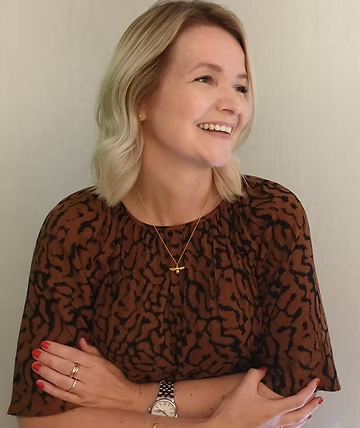
Clinical Psychologist · Practice Lead
Dr Nicky Hartigan is a Clinical Psychologist and the founder of the offline mind. Alongside her clinical work, she is an author, researcher and clinical supervisor. She completed her Doctorate in Clinical Psychology in 2007 and has since worked in senior positions in both the NHS and independent sector, supporting adults to overcome emotional challenges and find a steadier relationship with the technology in their lives.
Nicky selects and works alongside a small network of practitioners, all chosen for their experience with the ways technology shapes behaviour and identity. The team includes HCPC-registered clinical and counselling psychologists, CBT therapists, and psychotherapists trained in ACT and behavioural approaches.
Everyone who sees clients through the offline mind has worked with people around compulsive use, attachment to AI, reassurance-seeking, and the quiet identity shifts that come when work or relationships run through a screen.
“I came in thinking I'd be told to delete the app. Instead I learned what I was actually going there to ask for.”
Client, 34 · 10 sessions
Questions
Book a call
Twenty minutes with a psychologist, free, no notes taken. Fill in the form and we'll be in touch to arrange a time. If we're not the right place for you, we'll tell you where is.
